Each issue, we go back to one chapter of The Silence Between Two Heartbeats. The aim isn’t to summarize it, but to stay with what it leaves unresolved. This time it’s “Six Months Without a Night,” pages 60 to 72, where a father describes what happened after the monitors were unplugged and the family went home.
The more he learned, the more he watched. And the more he watched, the more there was to fear.
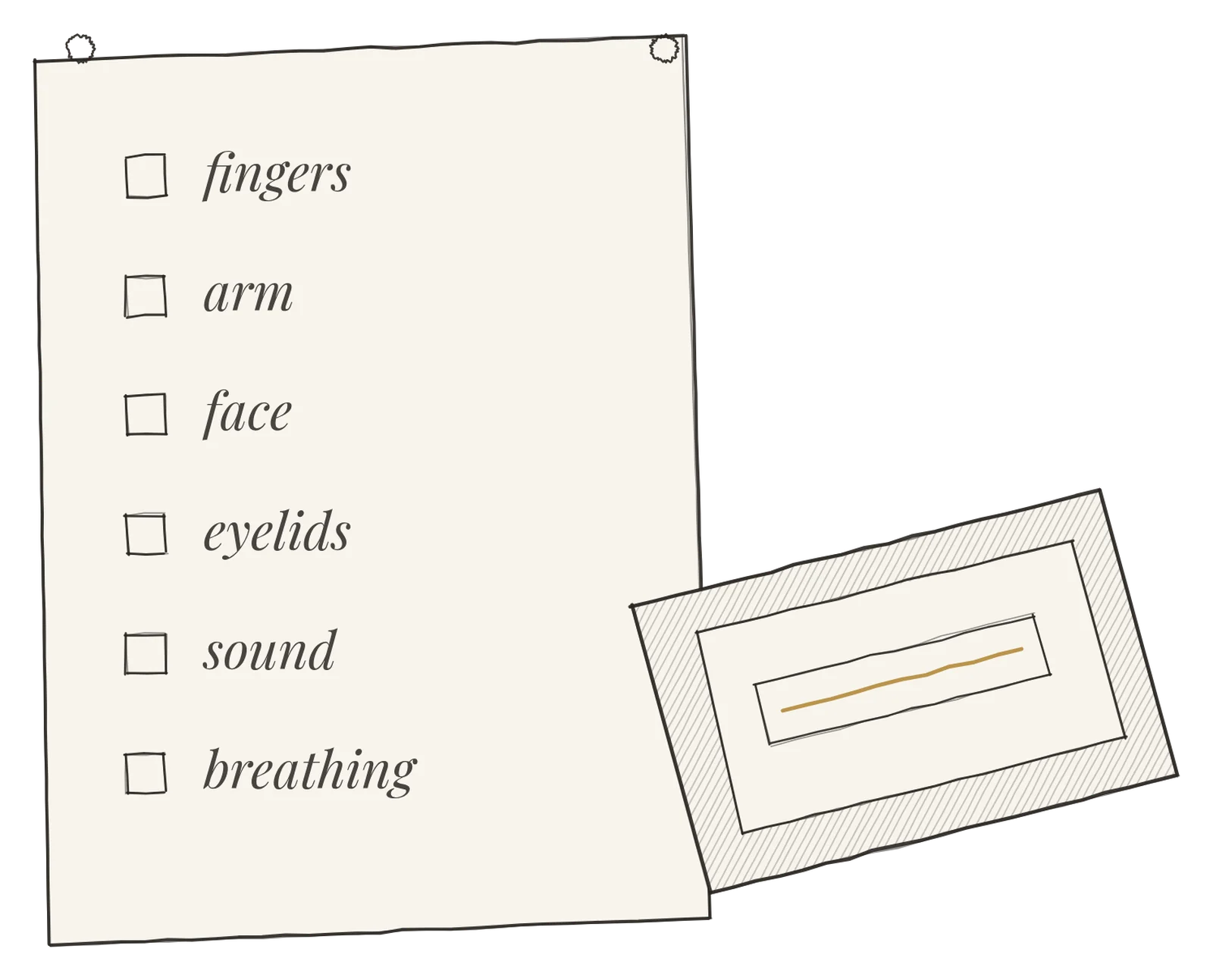
The chapter lays out a list no parent should ever have to memorize: a twitch of the fingers, a sudden stretch of an arm, a tightening in the face, movement under the eyelids, a strange sound, a change in breathing. The father looks up the warning signs online, learns them by heart, and then does the only thing a list like that leaves you able to do. He watches, night after night, for as long as it takes.
What the chapter captures, and what our research pages try to answer, is the space between seeing a movement and knowing what it means. The narrator has a checklist of symptoms but no way to read what he’s seeing against it. Nothing in his account tells him, or us, whether any particular movement mattered medically. That isn’t a weakness in the writing. It’s the most honest thing the chapter could say, because, as this issue’s Research Digest shows, the published evidence says the same: even trained clinicians can’t reliably tell a seizure from a startle just by watching.
Later chapters come back to the same fear from another angle. In one passage, the very moment the father has spent six months bracing for comes while he’s out of the house for a few minutes, buying food during a fever, and it reaches him as a single line over the phone: “Fareesa is shaking.” Read next to the research, that scene is less about one father’s vigilance failing and more about vigilance itself being an incomplete tool. No amount of watching can close a gap that only a validated way of recording could close.
The chapter doesn’t resolve the fear it describes, and neither does the research so far. Both leave behind the same open question this issue’s Spotlight names: not whether a family can watch closely enough, but whether medicine can yet offer them something more reliable than watching.
From the Book note: quotations and page references come from The Silence Between Two Heartbeats, First Edition, 2026 (ISBN 979-8-18255-919-5), Chapter Nine, pp. 60–72, and Chapter Fourteen, pp. 104–126, as read and cited by page in Section 3 of “From Lived Experience to Research Questions” (DOI 10.5281/zenodo.22927886). This reflection treats the chapter as narrative testimony, in line with the book’s own note that some passages were reconstructed from memory.