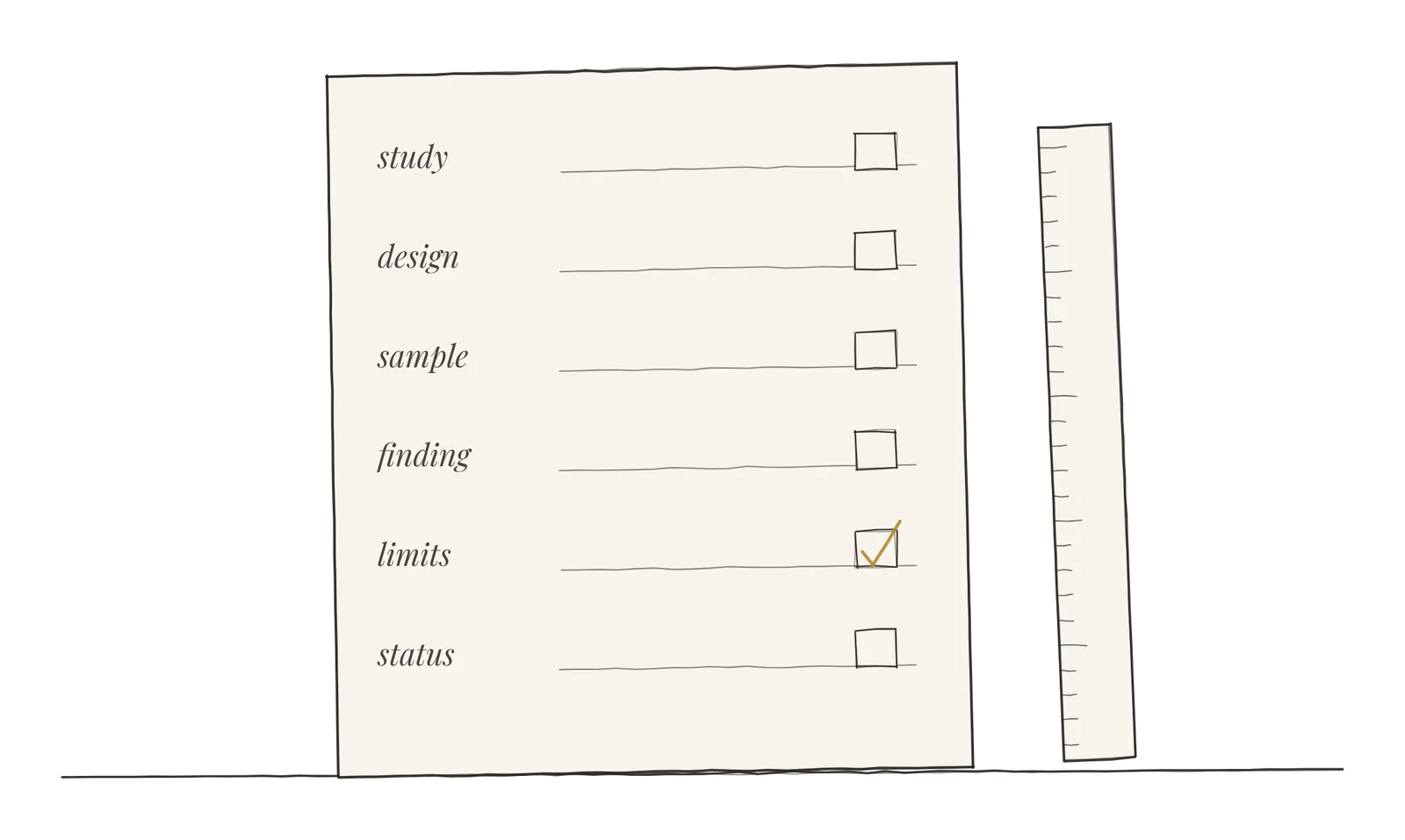
This template is a working tool for editors and contributors rather than something written for readers like the rest of the issue. We’re including it so the format is written down before we build a second issue, and so any new contributor can be handed a clear structure instead of inventing their own.
What every Research Watch entry must include
FieldWhat it needs
Study / sourceThe full citation (authors, year, journal or registry), with a link if it’s publicly available. No entry moves forward until this is filled in.
Population studiedWho the study actually enrolled: age range, risk level, and setting. Say clearly if that’s different from the group the magazine piece is talking about.
What was measuredThe actual outcome or endpoint, in the study’s own words, not a paraphrase that makes the finding sound broader than it is.
What the study foundOne or two sentences that stick closely to the study’s own reported result, including effect sizes or accuracy figures where they’re given.
What the study does NOT showThe clear limits: groups it didn’t cover, settings it didn’t test (for example, hospital vs. home), and outcomes it didn’t measure. This field is required. An entry isn’t complete without it.
Evidence tierEstablished / Experimental / Speculative, using the definitions in this issue’s source prospectus (Section 2.2). Established = backed by guidelines, randomized trials, or consistent peer-reviewed findings in the relevant population. Experimental = peer-reviewed or registered work that looks promising but hasn’t been validated for this population or setting. Speculative = a plausible idea with no direct evidence yet, offered only as a hypothesis.
Why it matters to our readersOne plain sentence on why a family or clinician should care, without stretching beyond what the study found.
Reviewed by[CLINICAL ADVISOR NAME], or [PENDING REVIEW] if it hasn’t been reviewed yet. No Research Watch entry is published as final until this field is filled in.
The rule
No exceptions: if an entry’s “What the study does NOT show” field is incomplete, or its “Reviewed by” field hasn’t been filled in, it doesn’t get published. This rule is there to guard against overclaiming, which our own launch plan names as the single biggest threat to our credibility.